
Desserts
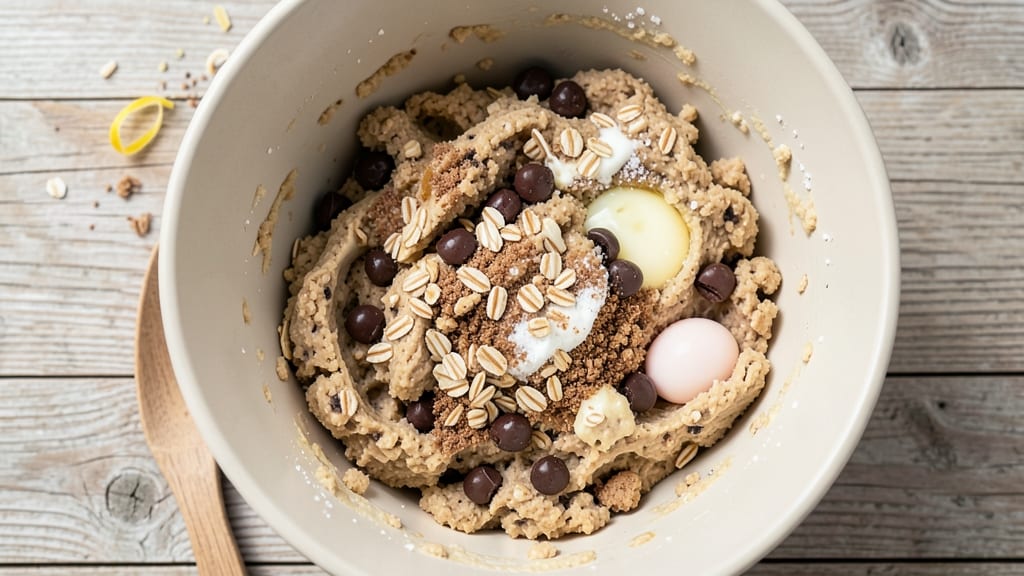
This basic oatmeal chocolate chip cookie recipe delivers the perfect balance of chewy centers and crunchy oats in every bite—foolproof and packed with warm cinnamon-spiced flavor. 💛 The secret lies in using both old-fashioned and quick oats for texture, plus a touch of brown sugar to deepen the caramel notes.
I've baked hundreds of batches, and this version consistently earns rave reviews for its simplicity and satisfying texture.
The recipe comes together with just 9 ingredients, including melted butter, brown and white sugar, eggs, vanilla, and of course, chocolate chips. A pinch of salt and cinnamon enhances the flavor without overpowering, while the oats add hearty texture that holds up through baking.
The dough is thick but manageable, requiring minimal mixing before baking at 350°F for 10-12 minutes—just enough time for edges to golden while keeping centers soft.
What makes these cookies stand out is their versatility. You can adjust the texture by chilling the dough (for thicker cookies) or spreading it thin (for crispier edges), and swap chocolate chips for nuts, dried cranberries, or even white chocolate.
The aroma alone—warm spices and melting chocolate—transforms any kitchen into a bakery.
Perfect for holiday baking, potlucks, or satisfying a late-night craving, these cookies stay fresh for up to a week in an airtight container. Let's get baking—your kitchen will smell like comfort in minutes.
Ingredients for basic oatmeal chocolate chip cookie
Nine simple ingredients that transform into 24 warm, spiced cookies with perfect chewy centers.
| Ingredient | Amount | Notes |
|---|---|---|
| Unsalted Butter 🧈 | 1 cup | Melted, full-fat preferred |
| Packed Brown Sugar 🍯 | 1 cup | Light or dark, no difference |
| Granulated White Sugar 🍚 | ½ cup | Standard grocery store sugar |
| Large Eggs 🥚 | 2 whole | Room temperature preferred |
| Pure Vanilla Extract 🌿 | 2 tsp | Imitation won't work |
| Old-Fashioned Rolled Oats 🌾 | 1 ½ cups | Not instant or quick oats |
| Quick Oats 🌾 | ½ cup | For extra texture contrast |
| Semisweet Chocolate Chips 🍫 | 2 cups | Nestlé or Ghirardelli preferred |
| Ground Cinnamon 🌿 | 1 tsp | Freshly ground if possible |
| Kosher Salt 🧂 | ½ tsp | Diamond Crystal preferred |
The butter makes all the difference here—use full-fat for that rich, melt-in-your-mouth texture. I always grab Land O'Lakes or Plugrah from the grocery store bulk section, but any good-quality brand works. The oats? Old-fashioned rolled oats give that hearty bite, while the quick oats add a subtle crunch. If you can only find quick oats, skip the extra half cup and use all rolled—just know the texture will be slightly less varied. For chocolate chips, Nestlé or Ghirardelli melt perfectly without burning, but any quality brand will do.
No vanilla extract? Vanilla bean paste works in a pinch (use half the amount), or even vanilla sugar (reduce sugar by 1 tbsp). Swap chocolate chips for white chocolate chips or chopped nuts if you're feeling adventurous—just toss them in after baking to prevent melting. The cinnamon is non-negotiable for that warm spice, but if you're out, pumpkin pie spice at half the amount gives a similar vibe. And yes, you can absolutely use dark brown sugar—it just adds a deeper molasses flavor that some people love.
This dough keeps for 3 days in the fridge, wrapped tightly in plastic. For longer storage, freeze the dough balls for up to 3 months—bake straight from frozen, adding 1-2 minutes to the time. Once baked, store cookies in an airtight container at room temperature for up to 5 days. Pro tip: Reheat in a 300°F oven for 2-3 minutes to revive that fresh-baked aroma. And if you're making these for a crowd, double the batch—they disappear faster than you can say 'holiday baking'
Why You'll Love This Recipe
- No-Fuss Mixing: I swear by the creamy butter and sugars—just cream, then fold in the oats and egg like you’re making a lazy Sunday morning. No food processor, no weird ratios, just good old-fashioned stirring. The dough comes together faster than you can say "chocolate chips."
- Chewy-Crisp Magic: That brown sugar caramelizes into a perfect chew, while the white sugar keeps the edges crisp—like a hug for your taste buds. (Yes, even on a Tuesday night.) The vanilla? It’s the secret handshake that makes these taste homemade, not store-bought.
- Bulk-Batch Buddy: Make a double batch, freeze half, and thank me later. These cookies reheat in 10 seconds (microwave, don’t judge) and taste like they just came out of the oven. My go-to for potlucks, lunchboxes, or when I need to bribe my kid into bedtime.
- Pantry Staple Power: You already have everything—no weird ingredients, no last-minute grocery runs. Butter, sugar, eggs, oats? That’s it. And because they’re soft (not hard), they last days without turning into hockey pucks. Budget-friendly? Absolutely. Reliable? Even more so.
Step-by-step instructions for oatmeal chocolate chip cookies
Here's how to create chewy, spiced cookies with perfect oat crunch every time.
🍳 Step 1: Cream Butter and Sugars to Lighten the Dough
In a stand mixer fitted with the paddle attachment, combine the 1 cup unsalted butter, 1 cup packed brown sugar, and 0.5 cup granulated white sugar. Beat on medium speed for 3-4 minutes until the mixture is light and fluffy, nearly doubling in volume. You'll see the color lighten from pale to a soft cream hue.
This creaming process incorporates air, which creates those signature crackly tops and helps the cookies spread just enough. I press down on the butter mixture with a spatula every 30 seconds to ensure even blending—this prevents pockets of unmixed sugar that can lead to dense cookies.
👨🍳 Step 2: Add Eggs and Vanilla for Structure
Add the 2 whole large eggs, one at a time, mixing on low speed for 30 seconds after each addition. Then add the 2 teaspoons pure vanilla extract and mix for another 10 seconds until fully incorporated. The mixture should look slightly thickened but still smooth.
Room temperature eggs work best here—they blend more easily and help create a tender cookie. If your eggs are straight from the fridge, let them sit in warm water for 5 minutes before using. This step is where the dough comes together, so don't rush it.
👨🍳 Step 3: Combine Dry Ingredients for Texture
In a separate bowl, whisk together the 1.5 cups old-fashioned rolled oats, 0.5 cup quick oats, 1 teaspoon ground cinnamon, and 0.5 teaspoon kosher salt. Gradually add this mixture to the wet ingredients, mixing on low speed for 30-45 seconds until just combined.
Here's where the texture magic happens—the rolled oats add chewiness while the quick oats create a delightful contrast. I use a silicone spatula to fold in the oats by hand at this stage to ensure even distribution. Overmixing develops gluten, which makes cookies tough.
🥘 Step 4: Fold in Chocolate Chips and Chill
Remove the mixer bowl and gently fold in the 2 cups semisweet chocolate chips using a silicone spatula. The dough will look thick and slightly shaggy, but that's perfect. Cover the bowl with plastic wrap and refrigerate for at least 30 minutes—I prefer 1 hour for best results.
Chilling the dough prevents excessive spreading in the oven and allows the flour to fully hydrate. This step is crucial for developing that signature oatmeal cookie texture. I press the dough into a disc in the bowl before refrigerating to make portioning easier later.
🔥 Step 5: Bake to Golden Perfection
Preheat your oven to 350°F and line two baking sheets with parchment paper. Using a 2-tablespoon cookie scoop, portion the chilled dough onto the prepared sheets, spacing them 3 inches apart. Flatten each cookie slightly with your palm to create a ¼-inch thick disc.
Bake for 11-13 minutes until the edges are golden brown and the centers look slightly underdone. They'll continue cooking on the hot pan after removal. Let them cool on the baking sheet for 5 minutes before transferring to a wire rack. The cookies should be soft in the center with crisp edges.
Pro Tips For Making Basic Oatmeal Chocolate Chip Cookie
- CHILL THE DOUGH: I learned this the hard way—skipping the 30-minute fridge rest makes for flat, cakey cookies. Even if you’re impatient (like me), give it time. The cold butter needs to firm up slightly, or your cookies will spread like pancakes.
- MEASURE BROWN SUGAR RIGHT: Pack that brown sugar tightly into the cup—don’t scoop and level. After years of underestimating this, I now use a spoon to press it down firmly. Too much air = cookies that taste dry and lack that caramel depth.
- USE ROOM-TEMP EGG: Cold eggs mix unevenly and can cause cookies to spread unevenly. Let them sit out for 10–15 minutes before cracking them into the bowl. Trust me, your cookies will be thicker and chewier—no more sad, flat discs.
- BAKE UNTIL GOLDEN: Pull them when the edges are just starting to turn golden, not when they look fully brown. Oatmeal cookies burn faster than they look, and overbaking turns them into hockey pucks. A toothpick should come out with moist crumbs, not dry bits.
Common mistakes when making your basic oatmeal chocolate chip cookie
Overmixing the Dough
I can't stress this enough—overmixing develops gluten, which turns your chewy cookies into tough, dense bricks. Once you've combined all ingredients, mix just until the oats are evenly distributed (about 30-45 seconds on low speed).
The dough should look shaggy, not smooth. I've ruined batches by mixing for too long, so trust your instincts when it looks "done enough." 🥄
Skipping the Chill
Chilling the dough for at least 30 minutes (I prefer 1 hour) is non-negotiable. Without this step, your cookies will spread excessively, losing that perfect oatmeal texture.
The cold dough also prevents excessive browning. Pro tip: Press the dough into a disc in the bowl before refrigerating—this makes portioning a breeze later.
Incorrect Oven Temperature
Baking at 350°F is crucial—any hotter and your cookies burn before the centers set; too cool and they stay doughy. I've seen home bakers use 375°F and end up with crispy exteriors and undercooked centers.
Invest in an oven thermometer to verify your oven's accuracy. Rotate pans halfway through baking for even heat distribution.
Using Wrong Oats
Instant oats or steel-cut oats won't give you that perfect texture. Stick to old-fashioned rolled oats for chewiness and quick oats for subtle crunch. I once used instant oats by accident—they dissolved into the dough, leaving me with a sad, gummy cookie. Double-check your pantry before mixing!
Overcrowding the Pan
Leave 3 inches between cookies on the baking sheet. Crowding causes uneven baking and steaming, which leads to soggy bottoms. I use a 2-tablespoon cookie scoop for consistent portions and parchment paper for easy cleanup. If you're short on space, bake in batches—patience pays off with perfect cookies.
Underbaking or Overbaking
Your cookies should bake for 11-13 minutes until edges are golden but centers look slightly underdone. They'll firm up as they cool. I've seen beginners pull them out too soon (soggy) or too late (dry).
The toothpick test works: Insert a toothpick—it should come out with a few moist crumbs, not wet dough or dry powder. ⏱️
Nutrition facts
Frequently asked questions
Why do your oatmeal cookies need both old-fashioned and quick oats?
The combination creates the perfect texture: rolled oats provide that satisfying chewiness, while quick oats add subtle crunch. If you only have one type, use all rolled oats—they'll still be delicious, just slightly less varied in texture. The rolled oats also hold their shape better during baking, preventing that gummy center.
Can I make these cookies gluten-free?
Yes, but you'll need to substitute the oats and flour (if using). Replace the oats with certified gluten-free rolled oats and use a 1:1 gluten-free flour blend (like Bob's Red Mill) for any additional dry ingredients. Keep the same measurements, but expect slightly more variation in texture. Always check labels—some oats are processed in gluten-free facilities but may still contain traces.
How do I prevent my cookies from spreading too much?
Chill the dough for at least 1 hour before baking—this is the #1 way to control spreading. Also, use a 2-tablespoon cookie scoop for even portions and flatten them to ¼-inch thickness. Bake at 350°F (not higher) and rotate pans halfway through. If they still spread too much, try baking for 1-2 minutes less than directed.
What's the best way to store these cookies?
Keep them fresh for 5 days at room temperature in an airtight container with parchment paper between layers. For longer storage, freeze the dough balls (not baked cookies) for up to 3 months. To revive stale cookies, warm them in a 300°F oven for 2-3 minutes—they'll taste almost fresh-baked again!
Can I add nuts or other mix-ins?
Fold in ½ cup chopped walnuts or pecans for extra crunch, or swap chocolate chips for white chocolate chips or dried cranberries. For a festive twist, add ½ teaspoon orange zest to the dough. Just